Profile and application separation
Visibility settings govern proactive discovery, while applications still share the selected resume and relevant profile information.
Job-site resume guide
SEEK combines job applications with a professional profile that can support recommendations and recruiter discovery. Profile visibility is separate from an application: SEEK says the selected resume and relevant profile information are shared with the advertiser when you apply.
My Best Resume is independent and is not affiliated with, endorsed by, or sponsored by SEEK Australia. SEEK Australia and its related marks belong to SEEK Limited or their respective owner.
Live evidence check
Paste the complete listing from SEEK Australia. The matcher separates direct support, adjacent experience, missing evidence, and hard requirements so you can decide what to emphasize without inventing a qualification.
Two-document evidence workspace
Supported
Direct resume evidence
Transferable
Related, not equivalent
Missing
A question, not a rewrite
Requirements
Not verified in the resume
Platform overview
SEEK Australia combines job listings with a candidate profile, stored resumes, recommendations, employer search, and credential verification. Profile visibility controls discovery, but it is separate from the information shared when the candidate actively applies.
That distinction is the central resume issue: the selected application resume goes to the advertiser regardless of profile visibility, while a default resume may also support employer discovery under some settings. The profile and application therefore need factual consistency even when the tailored resume changes emphasis.
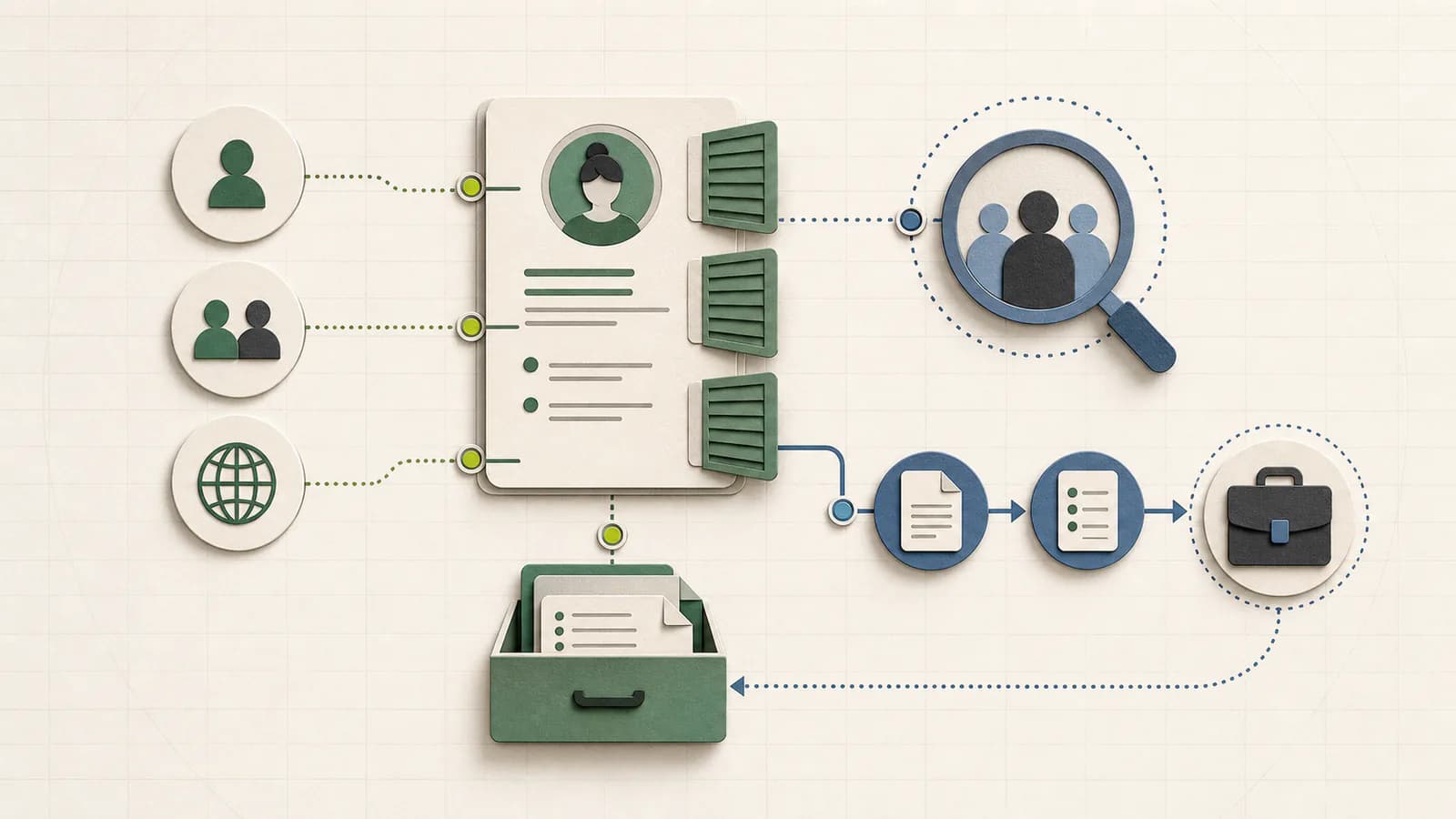
Visibility settings govern proactive discovery, while applications still share the selected resume and relevant profile information.
Public, Standard, Limited where available, and Hidden or Applications-only settings offer different discovery tradeoffs.
Local title language, licences, work rights, location, roster, and credential recognition can affect relevance.
Hiring landscape
SEEK spans the Australian labour market. These are representative high-opportunity sectors, not a live SEEK job-volume ranking.

Swipe the table to compare all columns →
| Job category | Why it fits this platform | What the resume should prove |
|---|---|---|
| Mining, resources, and engineering | Roles can depend on discipline, site, roster, location, safety, licence, and heavy-industry context. | Lead with discipline and valid tickets, then show project or asset scale, safety, reliability, cost, and technical outcomes. |
| Healthcare and community services | Employers recruit across clinical, allied health, disability, aged care, social, and operational services. | Surface Australian registration or supplied status, setting, caseload, safeguarding, systems, and care outcomes. |
| Construction and trades | Location, licence, white card, equipment, project, travel, and roster can be hard filters. | Name current credentials, trade scope, project type, tools, safety, quality, crew, and delivery. |
| Technology and digital | Searches include software, cyber, data, product, cloud, support, and transformation across Australian employers. | Connect the required stack and methods to system scale, users, delivery, reliability, security, and business impact. |
| Business, sales, and administration | Listings span customer, finance, office, professional, sales, operations, and management work. | Show Australian-readable scope, systems, customer or stakeholder context, targets, accuracy, cost, and outcomes. |
Category availability changes by location, date, eligibility, and employer demand. Always verify the live listing before applying.
Direct answer
Tailor an Australian-style resume to the live job ad, then make the SEEK profile support the same factual story. Choose Public, Standard, Limited, or Hidden visibility based on your privacy preference, but still inspect the resume selected for each application because the chosen file is sent to the advertiser regardless of profile visibility. Answer screening questions and right-to-work fields factually.
Who this guide is for
Best for candidates applying to Australian roles through SEEK, including international professionals translating overseas experience for the local market.
Application patterns
A job site can host the discovery step, the application step, or both. The resume should remain readable when the employer moves it into another workflow.
The candidate selects a resume and may answer advertiser questions while relevant application and profile information is shared with the advertiser.
Resume implicationReview the exact file, profile fields, contact details, and answers as one application package.
Depending on visibility, employers may find the profile, view information or a default resume, and make contact.
Resume implicationSet visibility deliberately and keep searchable skills, role history, credentials, location, and preferences accurate.
Resume priorities
Platform mechanics are only one constraint. A recruiter still needs a clear target, credible experience, and evidence that connects to this particular posting.
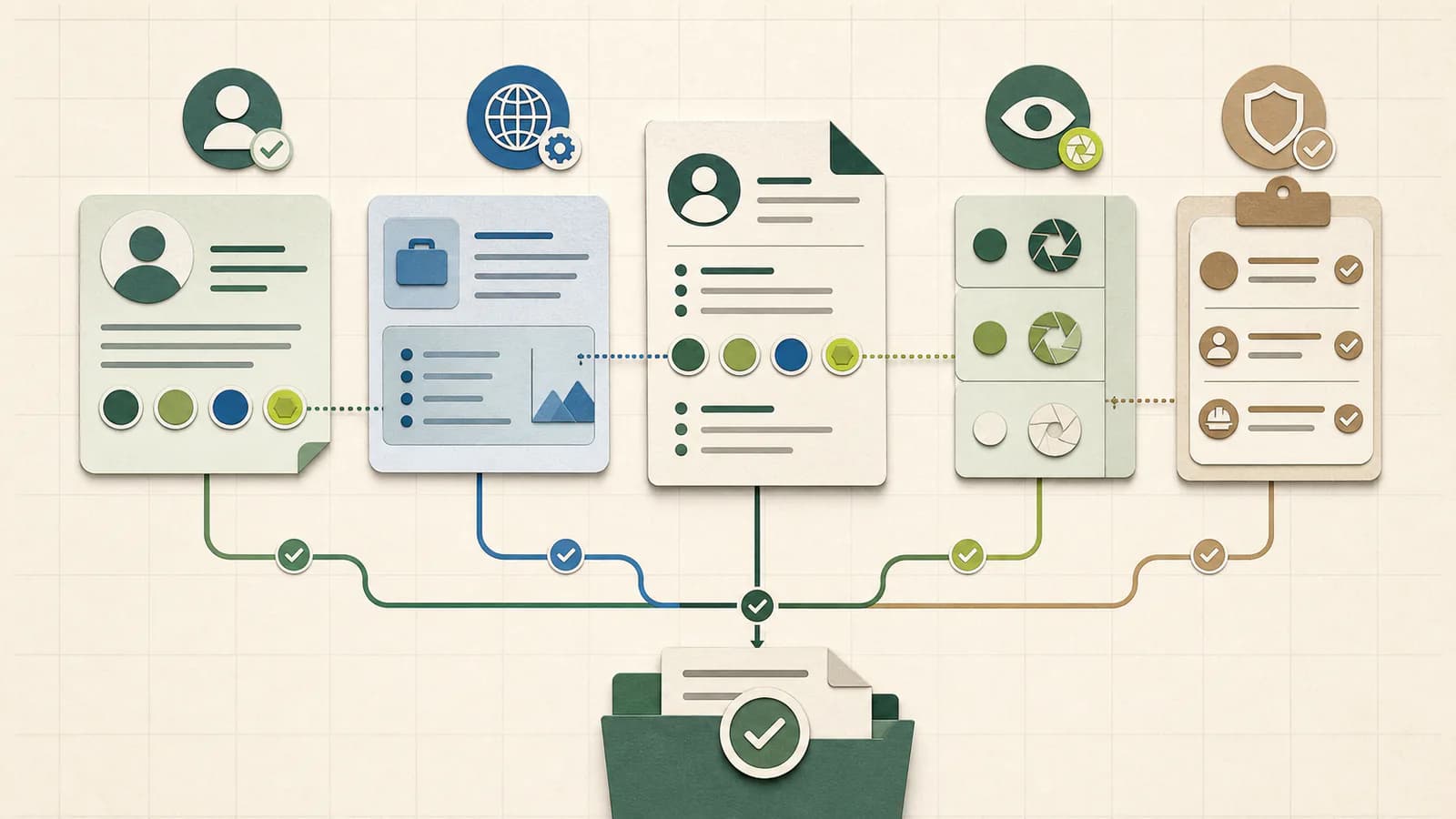
Employers can receive both application information and parts of the profile.
Which titles, dates, qualifications, locations, and skills must match across the resume and profile?
A local reader should understand level, scope, licences, and outcomes without guessing at overseas terminology.
What neutral context makes your employer, title, credential, or market scale comparable?
Public and Standard settings expose more information than Limited or Hidden settings.
Who should be able to find the profile, view the default resume, and contact you outside an application?
Advertiser questions and profile fields may cover work rights, licences, availability, and skills that cannot be inferred.
Which requirements are confirmed facts, and which should remain unanswered until you verify them?
Job-search tutorial
Follow the platform-specific path below, then use the checkpoint at each stage to catch a bad fit, missing proof, or wrong document before submission.
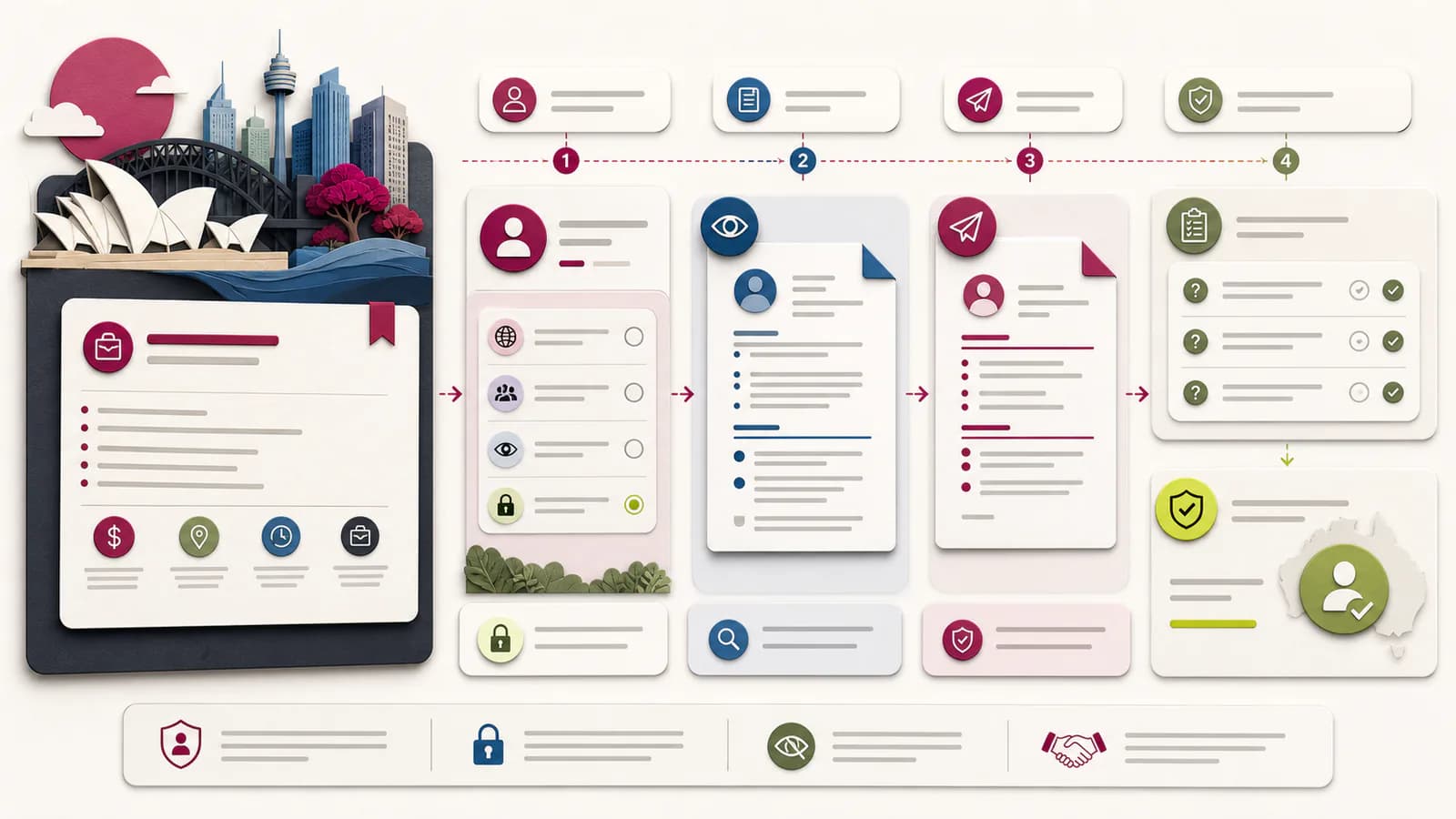
Set role, level, location or remote model, salary, employment type, roster, and any non-negotiable licence or work-rights constraint.
CheckpointThe search excludes roles that are professionally or practically unsuitable.
Separate duties, required credentials, screening questions, advertiser identity, and application instructions.
CheckpointHard requirements are verified, unanswered, or marked as gaps rather than inferred.
Preserve overseas titles and credentials while adding neutral context for scale, market, responsibility, and comparable outcomes.
CheckpointAn Australian recruiter can understand the experience without a false equivalence claim.
Check titles, dates, employers, licences, skills, location, and work-rights facts across the SEEK profile and selected file.
CheckpointThe tailored emphasis changes, but the factual record does not conflict.
Set discovery preferences deliberately, select the intended resume, answer advertiser questions accurately, and retain the package.
CheckpointYou know what can be discovered and what was sent with this application.
Before you submit
Recover the missing proof
Common mistakes
Tailoring should change selection, order, and language—not the underlying facts. Keep every claimed skill, scope, credential, and outcome traceable to evidence you can explain.
SEEK states that the selected resume and relevant profile information are still shared with the advertiser when you apply.
Review both the default document used for discovery and the separate file selected for the live application.
Name the actual credential and state local recognition only when it is verified.
Evaluate every advert independently against the candidate's evidence and constraints.
Limit 01
SEEK visibility controls and profile features can change; review the current account labels and privacy guidance before publishing information.
Limit 02
This guide cannot inspect private recommendation or advertiser systems, verify credential recognition or work rights, or guarantee discovery, interview, or offer.
Official-source notes
Platform features, file rules, and application flows can change. These notes were last reviewed on . Open the linked first-party guidance before relying on a changing detail.
SEEK's current visibility levels and explanation of what employers can see in discovery and applications.
Verified July 30, 2026
SEEK's current Australian resume guidance on content, formatting, and unnecessary personal information.
Verified July 30, 2026
Official profile features for job recommendations, employer discovery, visibility, and credential verification.
Verified July 30, 2026
My Best Resume is independent and is not affiliated with, endorsed by, or sponsored by SEEK Australia. SEEK Australia and its related marks belong to SEEK Limited or their respective owner.
Compare other application paths
Keep one evidence-rich master resume, then adjust the submitted version for the target role and the application path you will actually use.
Job-site guide
Tailor a resume for Workforce Australia, reconcile the online profile, handle direct and external applications, and keep reporting evidence accurate.
Open the guide →Job-site guide
Tailor an Australian resume for Jora, distinguish Profile Apply from redirected listings, state work rights accurately, and verify each destination.
Open the guide →Job-site guide
Tailor a New Zealand CV for Trade Me Jobs, align the Job Profile, manage visibility, and prepare a concise cover letter for each application.
Open the guide →SEEK Australia resume FAQ
SEEK says parts of the profile can form part of the application and the selected resume is sent to the advertiser regardless of visibility, with notice in the workflow.
Choose based on who should find and contact you outside an application. Review the current Public, Standard, Limited, and Hidden definitions on SEEK before deciding.
SEEK's current resume guidance recommends core contact information and advises leaving out unnecessary personal details such as age, religion, and marital status.
No. It uses only the resume and job description you provide. You must review and update SEEK profile facts and visibility yourself.
Start with the experience you already have, inspect what the role asks for, and only add claims you can verify. Then carry the target into the full resume workflow.