Student and graduate access
The service focuses on eligible tertiary students and extends graduate access for a defined period after graduation.
Job-site resume guide
Student Job Search connects New Zealand students and recent graduates with one-off, casual, part-time, internship, graduate, and full-time opportunities. Its site says graduate access continues for up to two years after graduation and provides a separate account and application-tracking help flow.
My Best Resume is independent and is not affiliated with, endorsed by, or sponsored by Student Job Search NZ. Student Job Search NZ and its related marks belong to Student Job Search or their respective owner.
Live evidence check
Paste the complete listing from Student Job Search NZ. The matcher separates direct support, adjacent experience, missing evidence, and hard requirements so you can decide what to emphasize without inventing a qualification.
Two-document evidence workspace
Supported
Direct resume evidence
Transferable
Related, not equivalent
Missing
A question, not a rewrite
Requirements
Not verified in the resume
Platform overview
Student Job Search NZ connects eligible tertiary students and recent graduates with one-off, casual, part-time, internship, graduate, and full-time work. The service combines role discovery with account, eligibility, proof-of-study, application tracking, and job-seeker guidance.
Candidates may have limited formal employment but still possess relevant evidence from coursework, projects, labs, volunteering, clubs, sport, caring, casual work, and previous overseas experience. A strong student CV turns those activities into skills through action, method, responsibility, scale, and outcome.

The service focuses on eligible tertiary students and extends graduate access for a defined period after graduation.
Listings can range from one-off and casual work to internships, graduate positions, part-time roles, and full-time jobs.
Account status, proof of study, applications, employer follow-up, and work responsibilities sit alongside job search.
Hiring landscape
SJS opportunities vary by study cycle, region, and employer demand. These are representative student and graduate pathways, not a live ranking.

Swipe the table to compare all columns →
| Job category | Why it fits this platform | What the resume should prove |
|---|---|---|
| Hospitality, events, and seasonal work | Flexible shifts and one-off roles can fit study schedules but often require clear availability and reliability. | Show availability, customer service, teamwork, pace, safety, cash or systems, and dependable attendance. |
| Retail and customer service | Part-time and casual roles can provide first formal experience and evidence of communication and responsibility. | Quantify customer volume, sales or service quality, stock or cash responsibility, teamwork, and problem solving. |
| Office, administration, and research support | Employers recruit students for data entry, coordination, reception, research, communication, and project support. | Use coursework and projects to prove systems, analysis, accuracy, writing, organisation, and stakeholder support. |
| Tutoring, care, and community work | Study expertise, communication, mentoring, volunteering, and responsibility can transfer into people-focused roles. | Show subject or population, methods, safeguarding, preparation, responsibility, and learner or community outcomes. |
| Internships and graduate careers | SJS also supports longer-term entry paths across technology, engineering, business, science, public, and creative work. | Lead with degree relevance, projects, tools, team role, applied learning, portfolio, and evidence of potential. |
Category availability changes by location, date, eligibility, and employer demand. Always verify the live listing before applying.
Direct answer
Confirm SJS eligibility and proof-of-study requirements first. Build a concise CV from verified study, projects, volunteering, campus activity, casual work, and prior employment, then tailor it to a small number of suitable roles rather than applying indiscriminately. State availability, transport, location, work rights, and study constraints accurately, and use the account to track applications and employer follow-up.
Who this guide is for
Best for eligible tertiary students and recent graduates in New Zealand, including candidates with limited formal experience or overseas backgrounds.
Application patterns
A job site can host the discovery step, the application step, or both. The resume should remain readable when the employer moves it into another workflow.
Eligible job seekers apply for flexible, one-off, casual, part-time, internship, and other roles listed for students.
Resume implicationForeground reliability, availability, practical skills, customer or community evidence, and study-compatible constraints.
SJS publishes entry-level, permanent, internship, and graduate roles that remain accessible for up to two years after graduation.
Resume implicationTranslate coursework, projects, placements, leadership, and early work into role-relevant professional evidence.
Resume priorities
Platform mechanics are only one constraint. A recruiter still needs a clear target, credible experience, and evidence that connects to this particular posting.
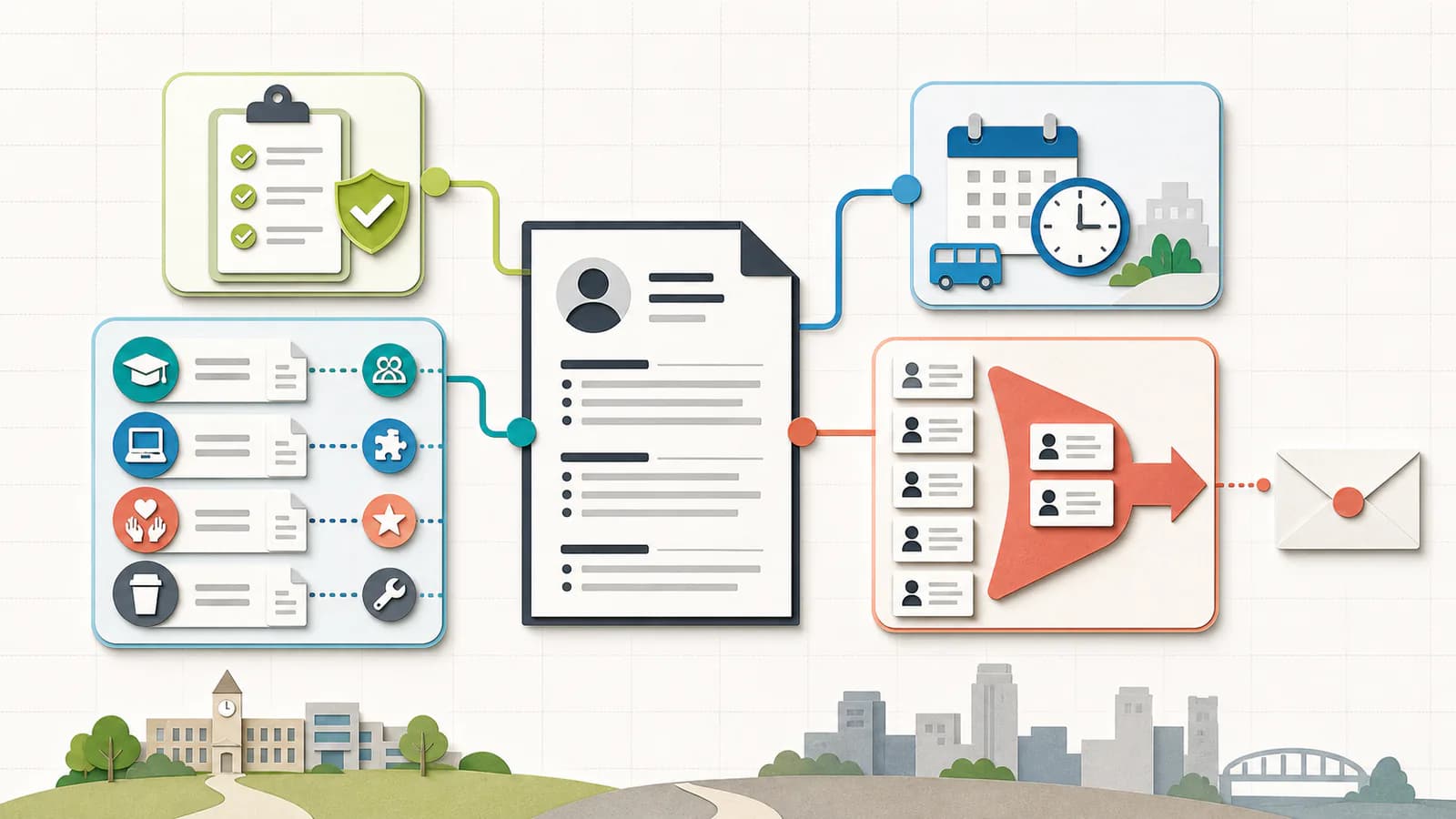
SJS serves defined student and recent-graduate audiences and can require proof of study.
What current study or graduation fact establishes access under SJS's latest eligibility rules?
Students may have useful evidence in projects, labs, volunteering, societies, caregiving, sport, or casual work.
What did you create, organise, analyse, serve, improve, or complete, and who relied on it?
Student roles can depend on shifts, transport, location, semester dates, and realistic start times.
Which days, hours, locations, transport options, and study commitments can you truthfully confirm?
SJS help asks whether candidates should apply to many jobs or a few, making suitability and preparation part of the workflow.
Why is this role genuinely suitable, and what two facts make the application stronger than a mass submission?
Job-search tutorial
Follow the platform-specific path below, then use the checkpoint at each stage to catch a bad fit, missing proof, or wrong document before submission.
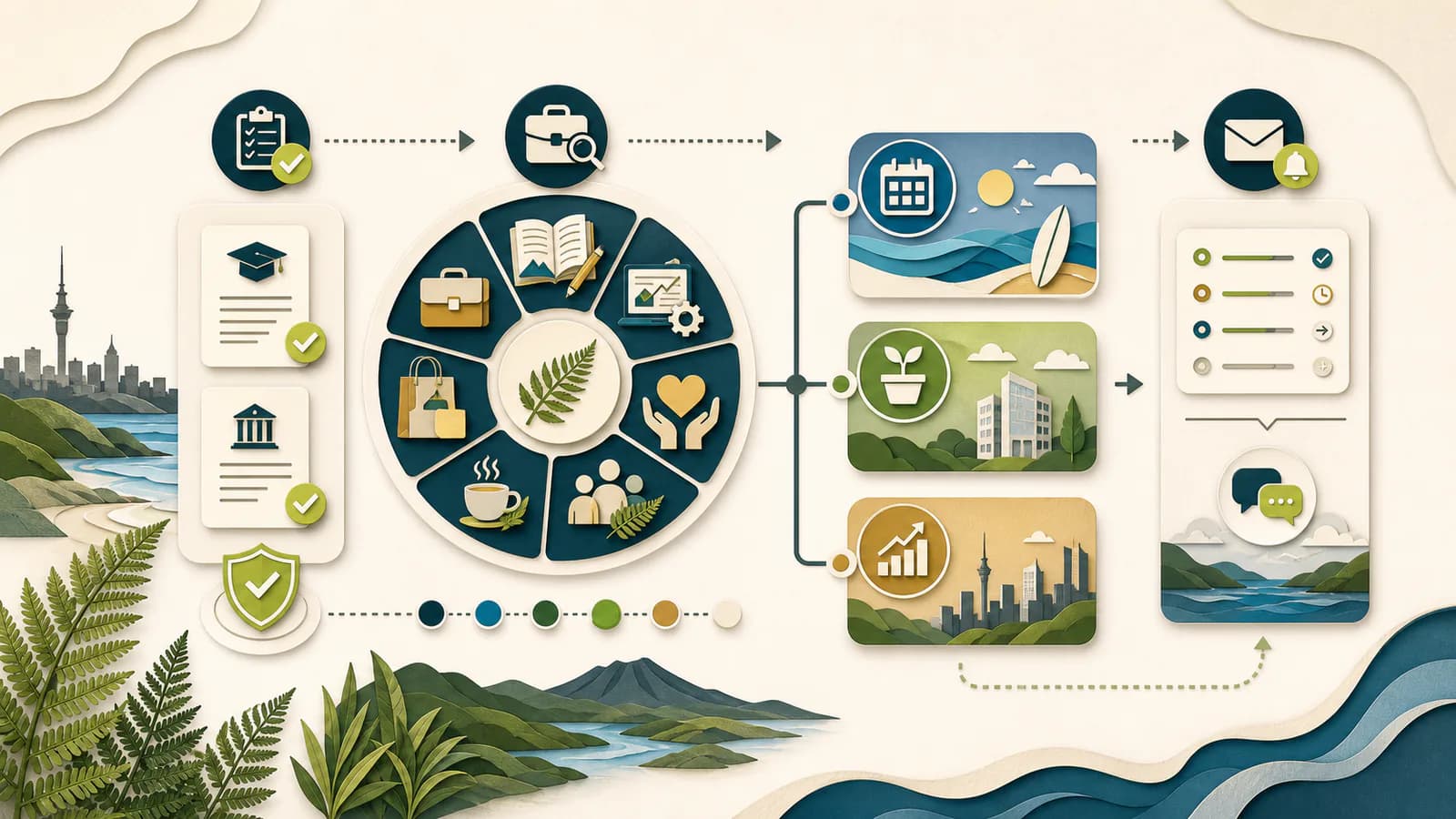
Confirm current student or graduate eligibility, proof-of-study needs, account details, and work-rights facts.
CheckpointThe account can be used for the role without an eligibility assumption.
Choose work type, region, transport, schedule, study commitments, minimum hours, and target experience.
CheckpointThe role can realistically fit study and personal obligations.
Collect examples from study, projects, clubs, sport, volunteering, caring, casual work, and prior employment.
CheckpointEach priority skill has a real example even if it did not come from a formal job.
Use a concise CV that emphasises availability and reliability for casual work or projects and discipline evidence for internships and graduate roles.
CheckpointThe document reflects the actual opportunity instead of one generic student profile.
Complete the SJS route, retain the advert and CV, monitor the account, and respond professionally to employer contact.
CheckpointThe application record, availability, and follow-up status are current.
Before you submit
Recover the missing proof
Common mistakes
Tailoring should change selection, order, and language—not the underlying facts. Keep every claimed skill, scope, credential, and outcome traceable to evidence you can explain.
Review current student, graduate, proof-of-study, and account requirements first.
Use verified projects, coursework, volunteering, leadership, practical tasks, and casual responsibilities.
State the days, hours, transport, and semester constraints the candidate can genuinely maintain.
Choose suitable roles and tailor the top evidence, availability, and short application answers.
Limit 01
SJS eligibility, proof-of-study, graduate access, account status, and individual job requirements can change and must be checked on the official service.
Limit 02
This guide cannot verify work rights, employer screening, job safety, tax status, interview selection, or an employment outcome.
Official-source notes
Platform features, file rules, and application flows can change. These notes were last reviewed on . Open the linked first-party guidance before relying on a changing detail.
Official overview of student, flexible, long-term, and graduate opportunities and the two-year graduate-access statement.
Verified July 30, 2026
Official help categories for eligibility, proof of study, account management, applications, tracking, and employment responsibilities.
Verified July 30, 2026
Official graduate-role scope, industries, locations, internships, resources, and access period.
Verified July 30, 2026
My Best Resume is independent and is not affiliated with, endorsed by, or sponsored by Student Job Search NZ. Student Job Search NZ and its related marks belong to Student Job Search or their respective owner.
Compare other application paths
Keep one evidence-rich master resume, then adjust the submitted version for the target role and the application path you will actually use.
Job-site guide
Prepare a Handshake resume for internships and early-career roles with relevant coursework, projects, campus evidence, clean files, and career-center review.
Open the guide →Job-site guide
Tailor a New Zealand CV for Trade Me Jobs, align the Job Profile, manage visibility, and prepare a concise cover letter for each application.
Open the guide →Job-site guide
Tailor a CV for jobs.govt.nz, map evidence to public-service criteria, follow each agency's application route, and verify work rights separately.
Open the guide →Student Job Search NZ resume FAQ
SJS publishes current eligibility and proof-of-study guidance for job seekers. Check that official help before creating or relying on an account.
SJS says its graduate opportunities are available for up to two years after graduation, subject to its current account and eligibility rules.
Use verified evidence from study, projects, placements, volunteering, societies, sport, caregiving, or practical responsibilities that relate to the job.
No. Focus on roles that fit your eligibility, skills, availability, location, and work rights, then tailor truthful evidence to each one.
Start with the experience you already have, inspect what the role asks for, and only add claims you can verify. Then carry the target into the full resume workflow.